A visitor guide to Field Museum in Chicago
The Field Museum of Natural History is Chicago’s huge natural history museum, best known for SUE the T. rex, ancient Egypt, and one of the broadest science-and-culture collections in the country. This is not a quick single-gallery stop: the building is large, the exhibits span multiple floors, and even a focused visit can run 3–4 hours. The biggest difference between a rushed visit and a satisfying one is route order. This guide covers timing, tickets, entrances, and the smartest route through the museum.
Quick overview
If you want the Field to feel manageable instead of overwhelming, decide your timing and route before you arrive.
- When to visit: Daily, typically 9am–5pm. Right at opening or after 3pm feels noticeably calmer than 11am–2pm, because school groups, families, and general admission visitors tend to overlap in the dinosaur halls late morning.
- Getting in: From $30 for standard entry. Booking is smart on weekends, holidays, and summer dates, while weekday off-season visits are easier to book closer in.
- How long to allow: 3–4 hours for most visitors. It stretches toward 5–6 hours if you add Ancient Egypt, the Ancient Americas, a 3D film, or slower label-reading in the science halls.
- What most people miss: The Grainger Hall of Gems, the Tsavo lions in the main hall, and the Ancient Americas galleries are often rushed past after SUE and Egypt.
- Is a guide worth it? Yes if you want context and a tighter route through the museum’s biggest halls; if you’re happy to self-pace, a map and clear shortlist usually do the job for less.
🎟️ Tickets for the Field Museum of Natural History are most likely to tighten up in advance during summer weekends, holiday weeks, and free-admission Wednesdays. Lock in your visit before the time you want is gone.
Jump to what you need
🕒 Where and when to go
🗓️ How much time do you need?
🗺️ Getting around
🦖 What to see
♿ Facilities and accessibility
Where and when to go
How do you get to the Field Museum?
The museum sits on Chicago’s Museum Campus, just south of Grant Park and the Loop, with Roosevelt as the main nearby transit hub.
Address: 1400 S. Lake Shore Drive, Chicago, IL 60605 | Find on Maps
- CTA train: Roosevelt station (Red, Orange, and Green Lines) → 15–20 min by bus or walk → best hub if you’re coming from the Loop or airports.
- CTA bus: #146 to Museum Campus → direct stop near the museum → the simplest public transit option once you reach Roosevelt.
- Driving: Via Lake Shore Drive → quickest from downtown outside rush periods → on-site parking usually runs about $27–$32 for 4–12 hours.
- Taxi/rideshare: Museum Campus drop-off → short walk to the entrance → easiest if you’re short on time or traveling with kids.
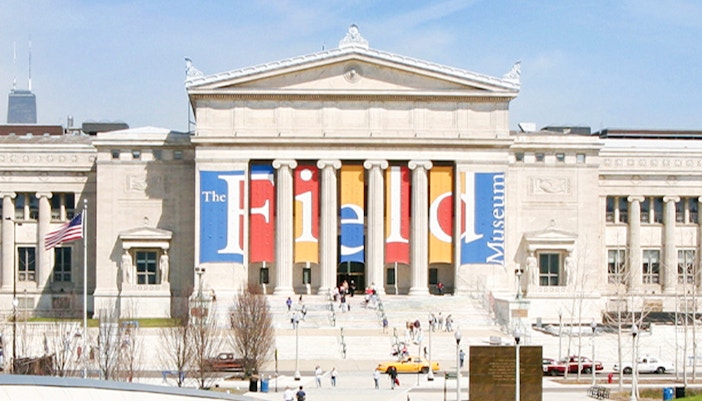
Which entrance should you use?
The Field Museum is straightforward once you’re at the building, but most visitors underestimate how much time security and ticket checks add late morning.
- Main entrance: Located at the front of the museum on S. Lake Shore Drive. Expect the slowest entry flow during 11am–2pm on weekends, school-break days, and free-admission Wednesdays.
When is the Field Museum of Natural History open?
- Monday–Sunday: 9am–5pm
- Last entry: Around 4pm
- Illinois resident free admission Wednesdays: Entry is free with advance reservation and valid ID, but the museum still runs on its regular daytime schedule.
When is it busiest? Weekends, free-admission Wednesdays, summer afternoons, and 11am–2pm year-round are the crunch windows, when SUE, Ancient Egypt, and the main hall feel the most congested.
When should you actually go? Arrive at opening if SUE is your priority, or go after 3pm if you want a calmer run through the dinosaur halls and easier photos in Stanley Field Hall.
How much time do you need?
| Visit type | Route | Duration | Walking distance | What you get |
|---|---|---|---|---|
Highlights only | Main hall → SUE and Evolving Planet → Ancient Egypt → exit | 2.5–3 hr | ~1.5km | You cover the biggest crowd-drawers and leave satisfied, but you’ll skip deeper cultural galleries, the gems hall, and most family-interactive spaces. |
Balanced visit | Main hall → SUE and Evolving Planet → Ancient Egypt → Ancient Americas → Gems Hall → exit | 3.5–4.5 hr | ~2.5km | This gives you the strongest mix of fossils, archaeology, and cultural collections, and feels like the best trade-off for a first visit. |
Full exploration | Main hall → dinosaur halls → Ancient Egypt → Ancient Americas → Gems Hall → Underground Adventure → rotating extras or 3D film → gift shop | 5+ hr | ~3.5km | You get the museum’s full range, but it’s a long indoor day and the later galleries are less rewarding if you burn all your energy on SUE too early. |
How do you get around Field Museum of Natural History?
Museum layout
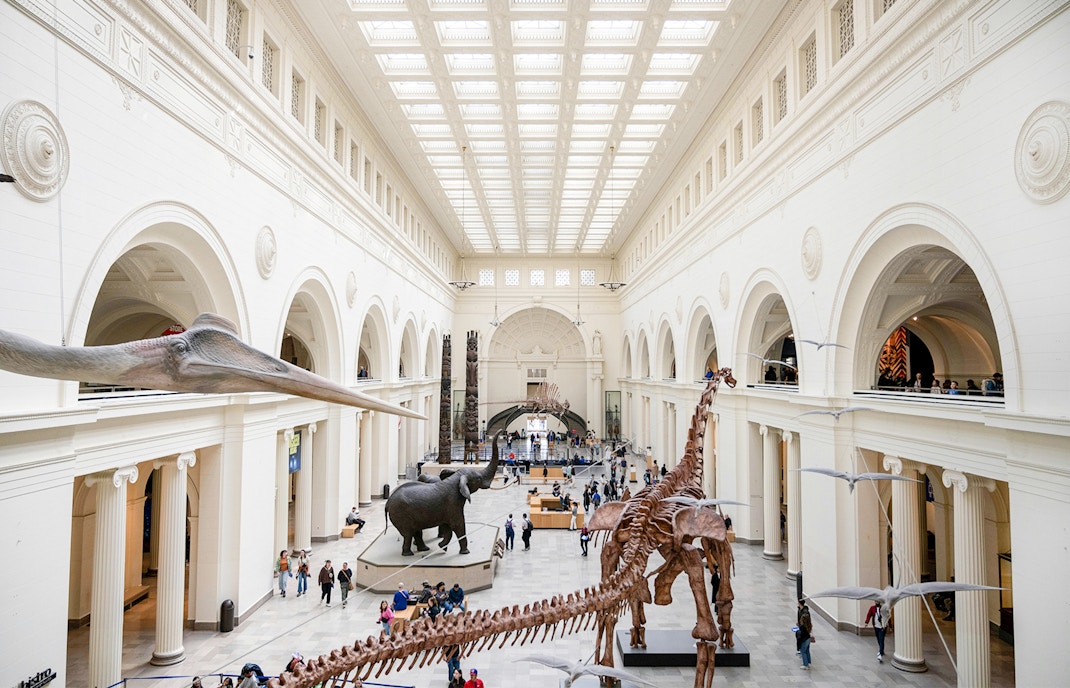
The Field feels like a large, multi-floor museum rather than a single linear route, so it’s easy to self-navigate once you know your priorities, but also easy to miss entire cultural halls if you wander without a plan.
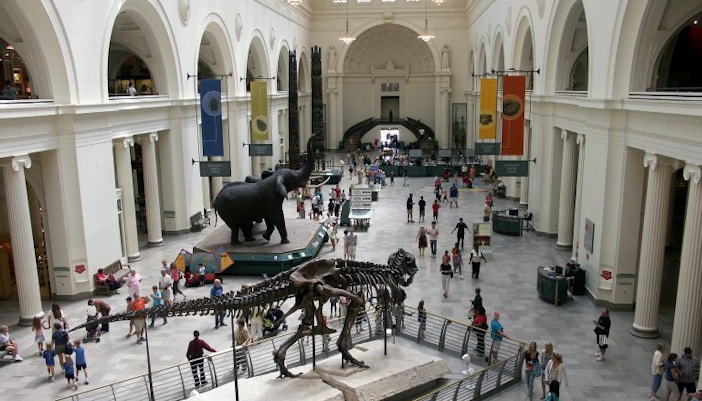
- Main level: Stanley Field Hall, Tsavo lions, and major orientation space → good first stop and photo break → budget 15–30 min.
- Dinosaur level: SUE and the Griffin Halls of Evolving Planet → the museum’s biggest draw and easiest place to lose time → budget 60–90 min.
- Culture halls: Ancient Egypt and the Ancient Americas → the strongest non-fossil galleries → budget 75–105 min together.
- Lighter stops: Gems Hall and Underground Adventure → great late-visit reset after heavier label-reading halls → budget 30–45 min.
Suggested route: Start with the main hall, go straight to SUE before late-morning crowds build, then move into Ancient Egypt while your energy is still high. Save Gems Hall and Underground Adventure for later, they’re easier to enjoy when you’re ready for something shorter and less crowded.

Maps and navigation tools
- Map: Download or pick up the museum map before you set off through the halls so you can link SUE, Egypt, and the Americas without backtracking.
- Signage: Wayfinding is good enough for main landmarks, but the quieter cultural halls are much easier to miss if you rely only on overhead signs.
- Audio guide/app: A guided experience adds the most value in Ancient Egypt and the Ancient Americas; self-guided visitors get more from a strong route plan than from lingering everywhere.
💡 Pro tip: Do the dinosaur halls first, not last, once the late-morning crowd builds around SUE, every stop after that feels slower than it needs to.
Where are the masterpieces inside Field Museum of Natural History?
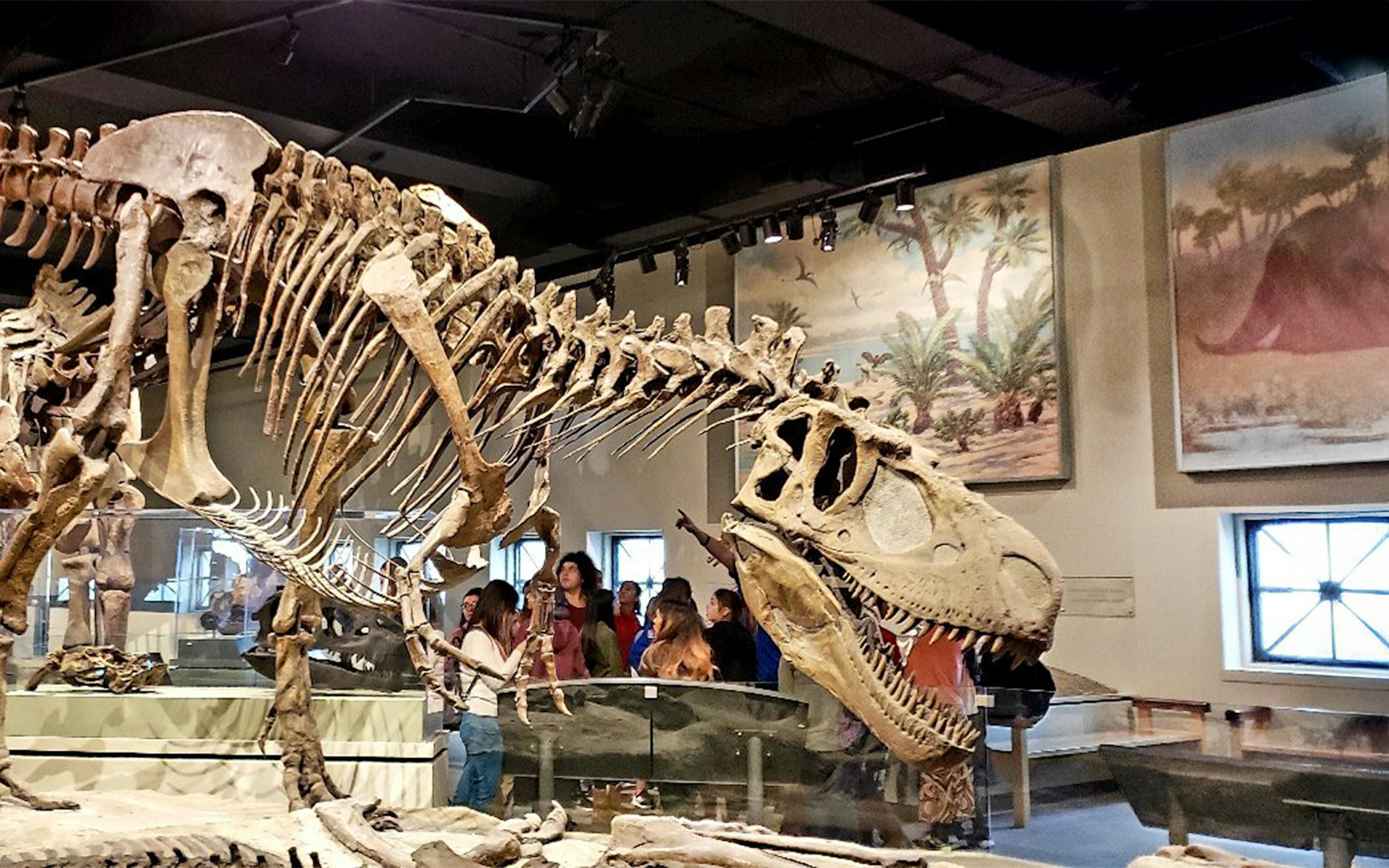
SUE
Species: Tyrannosaurus rex
SUE is the museum’s signature fossil and still the reason many first-time visitors come here. The skeleton is about 40 feet long and famously about 90% complete, so this is not just a quick photo stop, it’s the exhibit that anchors the whole Evolving Planet route. What most people rush past is the rest of the hall around it, especially the way SUE sits within a broader story of Earth’s history rather than as a standalone spectacle.
Where to find it: In the Griffin Halls of Evolving Planet on the dinosaur level.
Inside Ancient Egypt
Era: Ancient Egypt, centered on funerary life and burial traditions
This is one of the museum’s most atmospheric spaces: darker, quieter, and more immersive than many visitors expect after the open fossil halls. The full-size mastaba tomb and the mummy displays give the gallery real narrative shape, not just a row of cases. What people often miss is how much the tomb architecture matters, don’t rush straight to the mummies without walking the burial-space sequence first.
Where to find it: In the Inside Ancient Egypt gallery, reached from the main cultural-halls route.
Robert R. McCormick Halls of the Ancient Americas
Era: 13,000 years of history across the Western Hemisphere
This is one of the richest galleries in the building, but it’s often overshadowed by SUE and Egypt. The hall moves from early settlement through complex societies and major civilizations, with standout pieces tied to the Aztec, Maya, and Inca worlds. What most visitors miss is the scale model and interpretive material that make the gallery easier to read, it rewards slowing down more than speed-walking through cases.
Where to find it: In the museum’s cultural galleries, beyond the highest-traffic fossil halls.
Grainger Hall of Gems
Type: Mineral and jewelry collection
The Gems Hall is the reset room the museum needs after its heavier science and archaeology galleries. It’s visually striking, easier to take in in a shorter burst, and filled with enough standout pieces to hold even visitors who don’t usually seek out mineral collections. What many people miss is the raw-to-cut-to-finished sequence in the displays, which shows how each stone changes rather than just showing off the final sparkle.
Where to find it: In the Grainger Hall of Gems, usually best tackled after your main must-see halls.
Underground Adventure
Type: Interactive ecology exhibit
Underground Adventure is one of the smartest family stops in the museum because it changes the pace completely. Instead of more cases and labels, you move through a scaled-up soil world and meet insects and organisms that support life beneath your feet. What adults often underestimate is how much interpretation is built in here, it’s not just for kids, and it makes a strong late-visit stop when museum fatigue kicks in.
Where to find it: In the family-friendly interactive exhibit areas.
Tsavo lions and Máximo the Titanosaur
Type: Historic specimen display and monumental dinosaur model
These are the first dramatic visuals most visitors remember from the museum, and they do more than set up a lobby photo. The Tsavo lions give the grand entrance real narrative weight, while Máximo instantly resets your sense of dinosaur scale. What many people miss is walking the full hall for different sightlines, one quick photo from the entrance stairs doesn’t do either display justice.
Where to find it: In Stanley Field Hall, right after you enter the museum.
Facilities and accessibility
- 🎒 Bag checks: Every visitor should expect security screening at entry, so traveling light makes arrival quicker than showing up with a full day bag.
- 🍽️ Cafe: The Atrium café is the easiest on-site meal break and works best as a convenience stop in the middle of a long visit rather than as a destination lunch.
- 🛍️ Gift shop: The main store near the exit is the easiest place to pick up dinosaur-themed gifts, science toys, and Chicago museum souvenirs without backtracking.
- 🅿️ Parking: On-site Museum Campus parking is available and usually runs about $27–$32 for 4–12 hours, which is worth factoring into the real cost of a driving visit.
- 🪑 Rest areas: The museum’s large public halls and café zones give you natural reset points if you’re breaking up a 4-hour visit with children or older adults.
- ♿ Mobility: The museum’s wide halls make it easier to move through than many older museums, but the multi-floor layout means you’ll want the most direct elevator route as soon as you arrive.
- 👁️ Visual impairments: The museum is strongest where large specimens and dramatic gallery design do part of the interpretive work, so asking staff to help you prioritize those spaces makes the visit easier to shape.
- 🧠 Cognitive and sensory needs: Opening hour and late afternoon are the easiest windows if crowd density is the main challenge, because the busiest pressure points build around SUE and the main hall in late morning.
- 👨👩👧 Families and strollers: The Field is broadly family-friendly thanks to its wide circulation spaces and interactive stops, but a shorter, priority-based route works much better than trying to cover everything.
The Field works especially well for school-age children because the dinosaurs, giant animals, and interactive ecology spaces deliver quick visual payoff without needing constant reading.
- 🕐 Time: Around 2.5–4 hours is realistic with children, with SUE, Underground Adventure, and one cultural gallery usually being the right amount for a first visit.
- 🏠 Facilities: The café and the museum’s large public halls make it easier to pause, regroup, and reset without feeling trapped in a tight one-way route.
- 💡 Engagement: Treat the museum like a shortlist, not a checklist — children stay engaged longer if you build the visit around 3 big anchors instead of trying to ‘finish’ the building.
- 🎒 Logistics: Bring a light layer and keep bags small, because security screening is part of entry and the Egypt galleries can feel cooler than the main hall.
- 📍 After your visit: Shedd Aquarium is the easiest child-friendly next stop if you still have energy, because it’s on the same Museum Campus and doesn’t require a full city transfer.
Know before you go

What you need to know before you go
- Entry requirement: General admission is date-based, online booking is the simplest option, and valid ID matters if you’re using Illinois resident pricing or free-admission Wednesday entry.
- Bag policy: Every bag slows entry because security screening is required, so a small day bag gets you in faster than arriving loaded for the whole day.
- Re-entry policy: Re-entry is generally not permitted once you leave, which means lunch breaks and coffee runs are best handled before entry or at the on-site café.
Not allowed
- 🚫 Food and drink: Plan to eat in café or designated break areas rather than inside exhibit halls.
- 🚬 Smoking and vaping: Keep these outside the museum building and away from indoor public spaces.
- 🐾 Pets: Pets are not part of a museum visit, while service animals should follow the museum’s standard access rules.
- 🖐️ Touching exhibits: Don’t touch display cases, specimens, or artifacts unless a hands-on area clearly invites it, because many objects are irreplaceable.
Photography
Personal photography is usually part of the visit, especially in major halls like Stanley Field Hall and the dinosaur galleries, but always watch for room-specific signs in rotating exhibitions or more sensitive gallery spaces. Flash is best avoided around artifacts and cases, and tripods or bulky photo gear can slow you down in already crowded rooms. If you want your cleanest photos of SUE or the main hall, opening hour is much easier than midday.
Good to know
- Free-admission Wednesday: Illinois resident free days are great for value, but they’re usually one of the least relaxed times to visit if you care about space and pacing.
- Museum fatigue: The mistake most first-time visitors make is spending too long in the first blockbuster hall and then rushing the quieter galleries that actually deepen the visit.
Practical tips
- Booking and arrival: Book ahead for weekends, summer dates, and Illinois resident free-admission Wednesdays, because those are the days when timed entry matters most and late-morning arrival feels slowest.
- Pacing: Put SUE first while your attention is fresh, because the dinosaur halls reward time and are the easiest place to lose momentum if you hit them after noon.
- Crowd management: The sweet spot here is either right at 9am or after 3pm, not because ‘early is always better,’ but because late morning is when school groups, families, and walk-ins overlap in the same headline halls.
- What to bring or leave behind: Bring a light layer and a small bag; the museum is a long indoor day, the Egypt galleries can feel cooler, and every extra bag adds friction at security.
- Food and drink: If you want the least disruptive meal break, eat an early lunch at the on-site café before noon or a late one after 1:30pm, when the rush is less compressed.
- Route planning: Don’t save Ancient Americas or Gems Hall for the final 30 minutes, because those are the rooms most visitors regret skimming once museum fatigue sets in.
- Driving: If you’re arriving by car, treat Museum Campus parking as part of your ticket budget from the start, because $27–$32 parking changes the real cost of a family visit.
What else is worth visiting nearby?
Shedd Aquarium
Distance: 0.5 miles, about a 10-minute walk
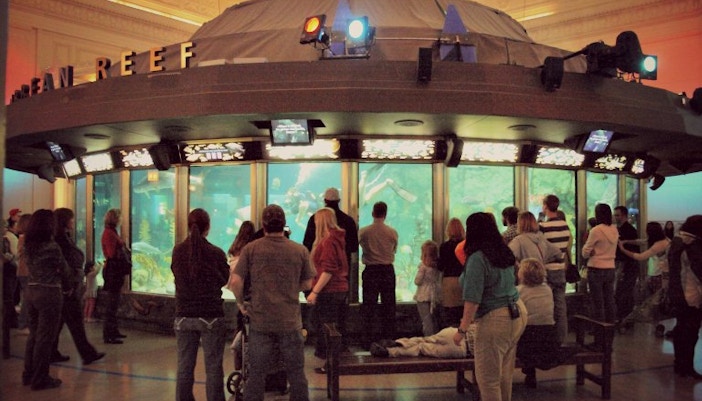
Why people combine them: The Field Museum of Natural History and the Shedd Aquarium are most commonly visited together, and simplest to do on a combo pass. A Chicago multi-attraction pass can bundle both and save up to 30% versus buying major attractions separately.
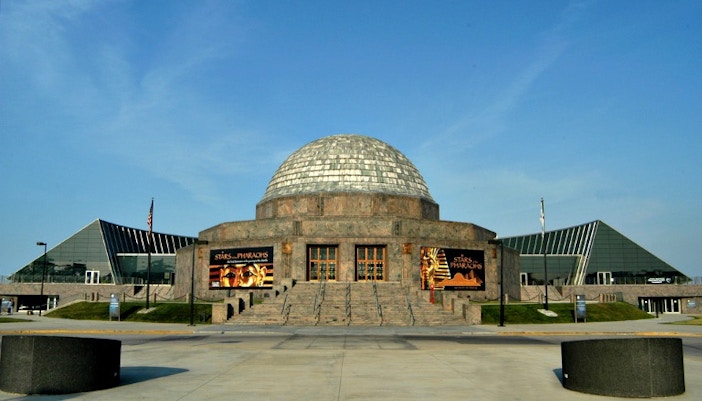
Adler Planetarium
Distance: 0.7 miles, about a 15-minute walk
Why people combine them: It keeps the science theme going without adding a complicated transfer, and it works well if you want one museum focused on Earth’s history and one on space.
Also nearby
Art Institute of Chicago
Distance: 1.5 miles, about a 10-minute cab ride or longer by foot
Worth knowing: It’s the strongest nearby add-on if you want your Chicago museum day to balance science and culture rather than stay inside the Museum Campus bubble.
Willis Tower Skydeck
Distance: 1.5 miles, about a 10–15-minute drive
Worth knowing: This is the easiest ‘big contrast’ add-on after a museum-heavy morning if you want skyline views and a change of pace instead of another gallery visit.
Eat, shop and stay near Field Museum of Natural History
- On-site: Atrium café, casual museum dining, moderate price point, and most useful as a convenience lunch when leaving the building would cost you time.
- The Gage (about a 10-minute drive, 24 S Michigan Ave): Upscale American fare, higher price point, and a good post-museum option if you want a proper sit-down meal near Millennium Park.
- Eleven City Diner (about a 10-minute drive, 1112 S Wabash Ave): Classic deli menu, moderate price point, and a strong choice if you want a generous, kid-friendly meal after a long museum visit.
- Lou Malnati’s Pizzeria (about a 10-minute drive, 805 S State St): Chicago deep-dish, moderate price point, and the easiest crowd-pleasing pick if your group wants something unmistakably local.
- 💡 Pro tip: If you’re eating on-site, go before noon or after 1:30pm — the lunch rush stacks up fast once the late-morning museum crowd peaks.
- Field Museum Store: Science toys, dinosaur gifts, books, and exhibit-themed souvenirs right inside the museum, which makes it the most practical stop before you leave.
- Roosevelt Collection Shops: A broader retail stop a short drive away if you want regular shopping after the museum instead of more attraction-specific souvenirs.
Yes, if your priority is Museum Campus access and a quieter base than the heart of the Loop. The immediate area feels more civic and lakefront than nightlife-heavy, so it suits short stays built around museums, walks, and easy daytime planning. If you want restaurants, bars, and late-night flexibility right outside your hotel, the area can feel too quiet.
- Price point: The area usually skews mid-range to upper-mid-range, with better value sometimes found a little farther west in the South Loop.
- Best for: Visitors on a short Chicago trip who want easy access to the Field, Shedd, and Adler without rebuilding their route each morning.
- Consider instead: The Loop or River North if you want denser dining and transit options, or the South Loop if you want a better-value base that still keeps Museum Campus close.
Frequently asked questions about visiting Field Museum of Natural History
Most visits take 3–4 hours, though you can easily spend 5–6 hours if you add a 3D film, a special exhibition, and a slower time in Ancient Egypt or the Ancient Americas. If you only want the headline stops, plan a focused 2.5–3 hours for SUE, the main hall, and one or two major galleries.
Yes, booking ahead is the smarter move, especially for weekends, summer dates, holiday periods, and Illinois resident free-admission Wednesdays. You may still be able to buy on-site, but advance booking makes arrival smoother and helps you avoid wasting museum time in ticket lines.
Arrive about 15–20 minutes early so you have time for security screening and ticket checks without starting the visit stressed. If you’re visiting on a crowded date, that extra buffer matters more than the nominal ticket time because lines build fastest from late morning onward.
Yes, but keep it light. Every bag goes through security screening, and a large day bag slows your entry more than a small essentials-only bag. If you’re planning a long museum day, bring only what you’ll really want to carry for several hours indoors.
Yes, personal photography is generally part of the visit, especially in the major permanent halls. The important thing is to watch for gallery-specific signage in rotating exhibitions or sensitive spaces, and to avoid turning crowded rooms into photo setups with bulky gear.
Yes, the museum works well for groups, especially school trips, family groups, and adult interest groups. The main thing to plan for is pacing: large groups move more slowly through SUE and Ancient Egypt, so a tighter shortlist matters more than trying to cover the whole building.
Yes, it’s one of Chicago’s easiest major museums to do with children because the biggest draws are visual, memorable, and spread across wide galleries. SUE, the main hall animals, and Underground Adventure usually land best, while trying to cover every floor in one visit can drain attention fast.
Broadly, yes, especially compared with older museums that have tighter room sequences. The main challenge is not room size but the museum’s scale across multiple floors, so the most useful move is asking for the best elevator-based route as soon as you arrive.
Yes. The easiest option is the on-site Atrium café, which is the most practical choice if you don’t want to lose time leaving the museum. If you want a fuller meal, the better range of restaurants is in the South Loop or around Michigan Avenue after your visit.
Yes, the Field Museum is commonly included in Chicago multi-attraction passes such as CityPASS. That makes sense if you’re also visiting Shedd Aquarium, Adler Planetarium, or other major city sights, but less sense if the Field is your only paid attraction.
The best time to visit is right at opening or after 3pm. Those windows are calmer than 11am–2pm, when families, school groups, and general visitors overlap most heavily in Stanley Field Hall, the dinosaur galleries, and Ancient Egypt.